
Buying Guides
How to Specify an EVA Foam Gasket That Actually Seals: Seven Checks Before You Order
A leaking gasket is usually a specification problem. Seven checks to run — cell structure, density, thickness, tolerance, adhesive, environment, sample — before you order.
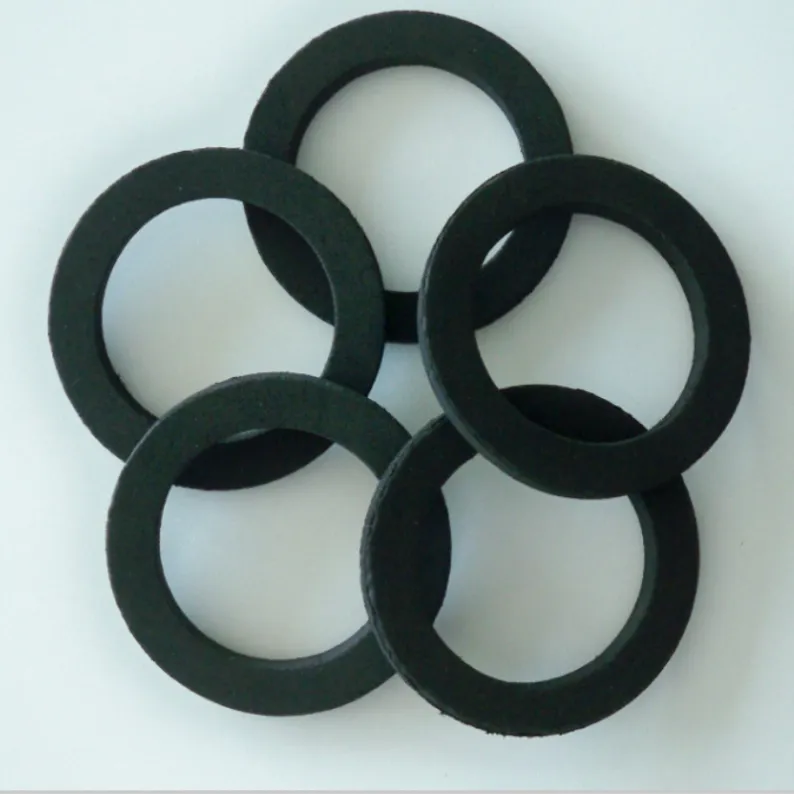
A gasket fails quietly. Nobody notices it on the day the order arrives. It shows up weeks later — dust inside a cabinet, water under a case lid, a door that rattles, a panel that never sat flat. By then the batch is cut, the adhesive is stuck down, and the fix costs more than the gaskets did.
Most of those failures trace back to the specification, not the material. EVA foam seals well when the grade matches the job. The checks below are the ones that decide whether it does. Run through them before you send the inquiry, and the sample round usually ends after one try.
- Closed cell, not open cell
This is the first fork, and getting it wrong ruins everything after it. Open-cell foam is a sponge: its cells connect, so water and dust travel through it. That is fine for a filter or a cushion. It is useless for a seal.
A gasket needs closed-cell foam, where each cell is sealed off from the next. Water sits on the surface instead of soaking in, and air has no path through the joint. Our closed-cell EVA foam sheet runs 30–120 kg/m³, 2–90 mm thick, in 2000×1000 mm sheets cut to size. If a supplier offers you an open-cell grade for a sealing job, that is the moment to stop and ask why.
- Density and hardness together, never one alone
Buyers often send one number — "80 density" or "40 Shore" — and expect the other to follow. It does not. Two foams can share a density and compress very differently, and two foams can share a hardness and recover very differently. Send both, and say what the gasket has to do: seal a lid that closes once a month, or a door that slams ten times a day.
A soft grade conforms to an uneven surface and forgives a rough flange. A firm grade holds its shape under a bolted joint and resists taking a permanent set. The mistake in both directions is the same: the gasket either never quite touches the surface, or it touches once and never springs back. If you are not sure which side you are on, say so in the inquiry — a sample in two densities costs one extra round, a wrong bulk order costs the whole batch.
- Measure the gap under compression, not at rest
A gasket is not a spacer. It works because it is squeezed, and the thickness you order should come from the squeezed gap, not the open one. Measure the gap with the joint closed and the fasteners torqued the way they will be in service, then work backwards: the foam needs enough thickness left after compression to keep pushing back against both faces.
Our EVA Gasket is die-cut in 2–20 mm. That covers most cabinet, case and equipment joints. If your gap is deeper than that, say so — sheet runs to 90 mm and layers can be laminated, but a single thick gasket and a laminated one behave differently, and the choice should be made before cutting, not after.
- Send a drawing, and ask how tolerance is held
A gasket is a shape, not a rectangle. Inner diameter, outer diameter, bolt holes, notches, a chamfer on one edge — every one of those has to survive from the drawing to the die to the thousandth piece. Send the drawing as a file, not as dimensions typed into an email. DXF or PDF, with the units stated plainly.
Then ask the question buyers usually skip: how is tolerance held across the run? A die that cuts cleanly on piece one and drifts by piece five hundred is a slow leak in your quality, not a sudden failure. A supplier who can answer that question in one sentence — die-cut, checked against the drawing, first article approved before the run — is a supplier who has done this before.
- Adhesive backing is a decision, not an afterthought
Half the gaskets we ship go out with adhesive on one side, and the adhesive causes more complaints than the foam. The reasons are always ordinary: the wrong adhesive for the surface, or the surface never cleaned before the gasket went on.
Decide three things. First, does the gasket need adhesive at all — a gasket trapped in a groove or under a bolted flange often does not. Second, what it sticks to: painted steel, raw aluminium, ABS, wood, each takes adhesive differently, and a smooth foam surface seals tightly but gives adhesive less to grip. Third, whether it ever has to come off again — a service panel gasket that gets replaced yearly wants a different bond from a gasket that is meant to stay for the life of the product. Put the surface material in the inquiry. It takes one line.
- Say where the gasket will live
EVA handles water, dust and vibration well, and that covers most of what a gasket is asked to do — doors, cabinets, cases, equipment housings. But "indoors" and "outdoors" are not the same job, and neither are a kitchen cabinet and an engine bay.
Outdoor use means UV and weather, and there are UV-resistant grades for exactly that. A gasket that sits near a heat source or in regular contact with oil needs a different conversation: EVA has limits, and a seal that spends its life hot or soaked in solvent is a job for another material. Tell the supplier the environment before the sample is cut. A supplier who says no to a bad fit is saving you a failed batch, not losing a sale.
- Approve the sample in writing, and test it in the assembly
We make samples within 7 days. That sample is the cheapest test you will ever run — use it properly. Fit it in the real assembly, close the joint the way it will close in service, and leave it for a day. Check the compression, the seal, the adhesive bond, the colour against the panel. A sample checked on a bench tells you the foam is foam. A sample checked in the product tells you the order will work.
Approve it in writing, with the density, thickness, colour and adhesive stated. That written approval becomes the reference for the bulk run, so the thousandth gasket matches the first. A colour approved by phone and a density agreed in a chat message are the gaps where orders go wrong.
Ordering, once the checks are done
The commercial side is straightforward. MOQ is 100 pieces per colour. Bulk completes within 15 days of sample approval. A quotation comes back within 24 hours of receiving the specification and quantity. Trade terms are FOB Ningbo or Shanghai, EXW, CIF or CFR; payment by T/T, L/C, D/A, D/P or O/A. No prices are listed on this site — every order is quoted on its specification and quantity.
On compliance: the factory is SGS-tested, PAHS compliant and ISO 9001 certified, with a BV factory audit on record (MIC-ASR2431136). REACH, RoHS and EN71 reports are SGS special tests arranged per customer order and target market — they are not standing certificates, and we say so plainly.
What to send us: the drawing, the thickness, the density and hardness if you know them, the surface the gasket sits on, the environment it lives in, and the quantity. If you are still deciding between sheet and gasket grades, start from the standard EVA foam sheet and tell us the joint — we will point you to the grade that seals it. A gasket is a small part of most products. It is also the part that decides whether the product stays dry, quiet and dust-free. Specify it like it matters, because it does.